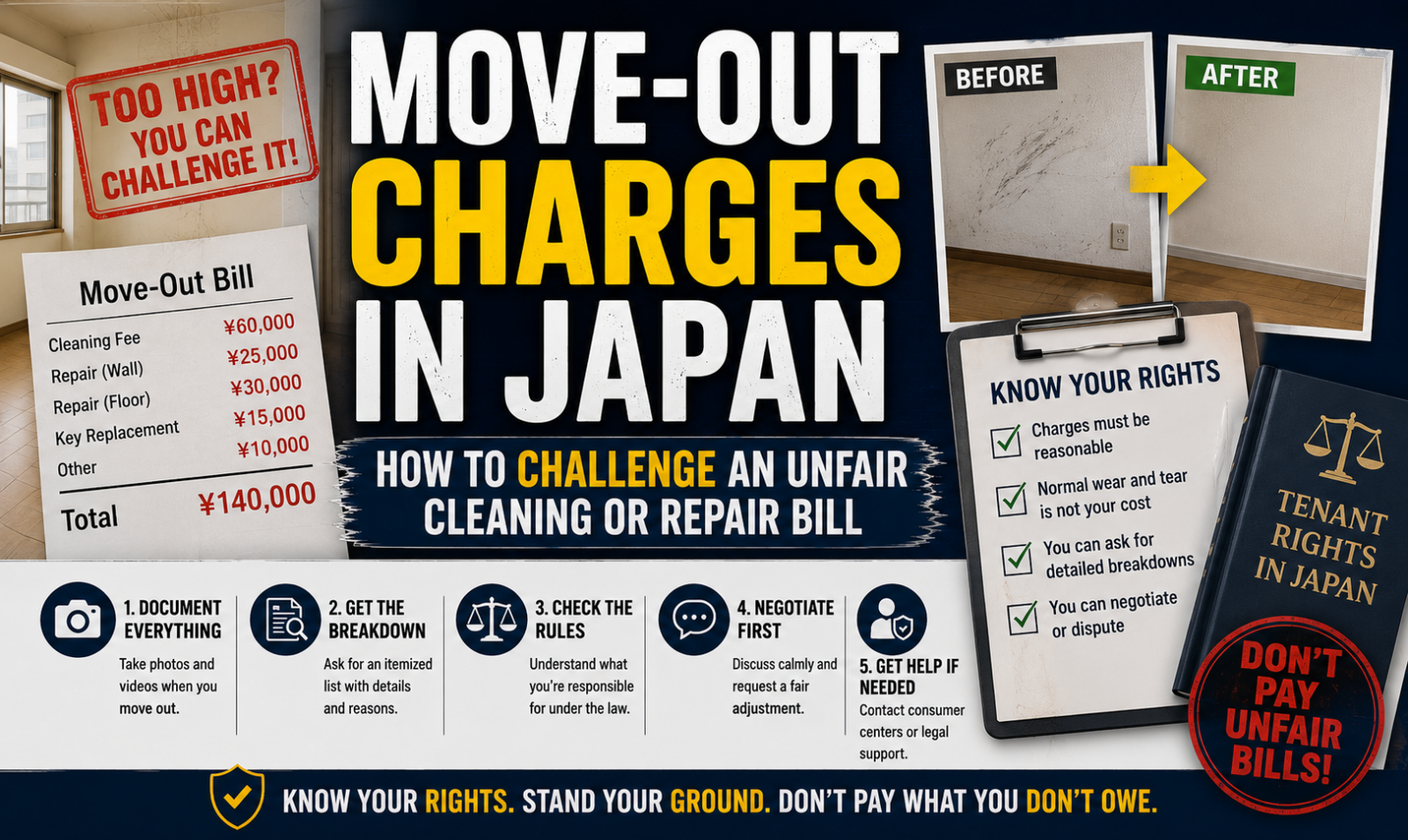
Move-Out Charges in Japan: How to Challenge an Unfair Cleaning or Repair Bill
If you think you were overcharged when leaving an apartment in Japan, do not assume you must pay the full bill just because the landlord or management company sent it. In many private rentals, normal wear and tear is not the tenant’s responsibility, and the landlord can only deduct justified costs from your deposit.
The practical first move is simple: ask for a written breakdown, check your contract’s special clauses, and compare the bill with Japan’s national move-out guideline before you agree to anything.
- Who this helps: foreign residents, students, workers, and long-term renters leaving a private apartment in Japan
- When it matters: after the move-out inspection, when your deposit is reduced, or when you receive an extra bill for cleaning, wallpaper, flooring, or repairs
- Main rule: ordinary aging and normal use are generally the landlord’s side, not yours
- Important exception: a clearly agreed contract clause can shift some costs, such as fixed cleaning fees, so the contract still matters
The short answer: what you should do first
When a move-out bill looks too high, take these steps in order:
- Ask for the full settlement in writing. Get the breakdown of each charge, the damaged area, unit price, and photos.
- Check your lease and any special clauses. Cleaning fees, key replacement, pet clauses, and smoking clauses often appear there.
- Separate normal wear from actual damage. Faded wallpaper, sun discoloration, and aging are different from holes, burns, or damage caused by misuse.
- Do not sign a final agreement on the spot if you disagree. Especially during a hurried handover.
- Object in writing and ask for recalculation. Keep the message factual.
- Use a consultation channel if needed. In Japan, the consumer hotline
188connects you to a local consumer affairs center.
Who pays for what in Japan
Japan’s main national reference is the Ministry of Land, Infrastructure, Transport and Tourism guideline on restoration at move-out. It is not the lease itself, but it is the standard many landlords, consumer centers, and dispute handlers use when arguing over charges.
The key point is that “restore to original condition” does not mean “return the room to brand-new condition.” It mainly means paying for damage caused by intentional acts, negligence, poor maintenance, or use beyond ordinary living.
Usually not your responsibility
In a typical private rental, these are often treated as the landlord side or already covered by rent:
- aging over time
- ordinary wear from daily living
- fading from sunlight
- minor deterioration from normal use
More likely to be your responsibility
These are more likely to be charged to the tenant if the facts support it:
- holes or deep scratches caused by careless use
- heavy stains or odors caused by smoking or pets, if beyond ordinary use
- mold or water damage caused by poor ventilation or failure to clean
- damage caused by moving furniture carelessly
- missing fixtures or unauthorized alterations
ここがポイント: In Japan, the dispute is usually not about whether the room changed. It is about why it changed and whether the change came from ordinary use or tenant-caused damage.
Why the contract still matters
National rules are only one part of the picture. Your lease may contain special clauses that change who pays for certain items.
This is where many foreign renters get stuck. A charge may feel unfair, but if the clause was specific, disclosed, and accepted, it can still matter.
Clauses to check carefully
- fixed house-cleaning fee at move-out
- key replacement fee
- pet-related cleaning or deodorizing fee
- smoking-related wallpaper replacement rules
- air-conditioner cleaning or disposal costs
- short-term contract or furnished-room conditions
A weak bill often mixes two different things:
- legitimate contract-based charges
- inflated or badly explained repair claims
Your job is to split them apart, not to reject everything at once.
How to read a suspicious move-out bill
A proper challenge starts with the numbers. Do not argue only in general terms like “this is too expensive.” Ask what each line means.
Ask for these details
- what exact part of the room was damaged
- whether the charge is for cleaning, repair, replacement, or full renovation
- the size of the affected area
- why partial repair was not possible
- how the building material’s age was considered
- whether the charge comes from the lease clause or from alleged damage
This matters because Japan’s guideline says tenant responsibility should be limited to the damaged part as much as possible, and that elapsed years should be considered when calculating the tenant’s share.
If you lived there for several years and the bill still asks you to pay as if the wallpaper or flooring were new, that is a reason to question the calculation.
What your deposit can and cannot be used for
Under Japan’s Civil Code, the landlord must return the remaining deposit after deducting money the tenant actually owes under the lease once the lease ends and the property has been returned.
That means your deposit can be used for legitimate unpaid obligations. It does not mean every claimed repair automatically becomes valid just because it was deducted first.
If the landlord keeps part of the deposit, ask for:
- the original deposit amount
- each deduction item
- the legal or contract basis for each deduction
- the final balance to be returned
- the scheduled return date
A practical way to dispute the bill
You do not need to start with a lawyer. In many cases, a calm written objection is the right first step.
Sample structure for your message
- state the apartment name, room number, and move-out date
- say which charges you dispute
- ask for the contractual basis and evidence for each charge
- ask how normal wear and elapsed years were considered
- request a revised settlement by a clear date
Keep screenshots, emails, inspection sheets, and move-in photos together in one folder. If you had an interpreter, friend, or agent present at inspection, note who was there and what was said.
Documents that help most
- lease agreement
- important matters explanation document
- move-in condition photos or checklist
- move-out inspection sheet
- repair estimate and final invoice
- deposit settlement statement
- email or chat records with the landlord or management company
Common situations that lead to overcharging
Some disputes are predictable. These are the patterns to watch for.
Full wallpaper replacement for one damaged spot
If one section was damaged, ask why you are being billed for an entire wall or room. The management side should explain why a smaller repair was impossible.
Charging for old materials as if they were new
The national guideline says elapsed years should be considered. If the room was not newly renovated when you moved in, that matters even more.
Calling normal dirt “special cleaning” without proof
A routine move-out cleaning clause may be valid if it is clearly written in the contract. But an added claim for unusual dirt, odor, or mold should still be explained with evidence.
Pressure to agree during the handover
Some tenants feel pushed to sign immediately during the final inspection. If you do not understand the Japanese explanation or want time to check the figures, say so and ask for the documents by email.
Where foreigners in Japan can get help
If the landlord or management company will not revise the bill, the next step is usually consultation.
Consumer affairs centers
Call 188 in Japan. This connects you to the nearest consumer affairs center. They can explain your options and may help you frame the dispute.
Local language support
Support varies by municipality. Some cities and prefectures offer foreign resident consultation in multiple languages, while others mainly handle Japanese. If your Japanese is limited, ask whether your city hall or international association has housing or consumer support.
Formal dispute channels
The national guideline also points to formal routes such as:
- mediation or other out-of-court dispute resolution
- small claims court for lower-value disputes
- court action when the amount or evidence justifies it
Current status in 2026: why this issue still matters
This is not an old problem that has disappeared. The National Consumer Affairs Center of Japan issued a fresh warning on February 17, 2026 about restoration-cost disputes in rental housing.
Its public data page, updated on August 1, 2025, showed 13,277 consultations in fiscal 2024 on rental housing restoration disputes, with 1,641 cases recorded by May 31, 2025 for the next fiscal year’s running total. That tells you two things:
- move-out billing disputes are still common
- consumer authorities are still treating them as a live problem, not a rare exception
The core national framework has not changed in a way that suddenly makes broad move-out charges acceptable. The bigger change for renters is practical: more contracts are handled digitally, more explanations happen quickly, and tenants who do not keep records are easier to pressure.
Mistakes to avoid
- paying first without asking for a breakdown
- confusing a fixed contract cleaning fee with a damage claim
- throwing away move-in photos or inspection sheets
- signing a Japanese-language settlement you do not understand
- arguing only emotionally instead of asking for evidence and calculation details
- assuming Tokyo rules are different from national rules
The legal framework is national, but actual support, language access, and the style of management companies vary by city and operator.
What to check before you leave your next apartment
The best move-out dispute is the one you prevent before it starts.
- photograph every room at move-in and move-out
- keep the lease, rider clauses, and inspection sheets
- confirm notice deadlines for termination
- ask in advance whether cleaning fees are fixed
- attend the final inspection if possible
- ask for written confirmation, not verbal promises only
Final takeaway
If you are overcharged when moving out of an apartment in Japan, the strongest response is usually not a dramatic one. It is a documented one.
Check the contract, separate normal wear from real damage, demand a written breakdown, and use 188 or a local consultation desk before you give up part of your deposit. The next thing to watch is not only the amount on the bill, but whether the landlord can explain each line with evidence, contract language, and a fair calculation.
参照リンク
- MLIT: Guidelines on troubles related to restoration to original condition
- MLIT: Download page for the guideline and Q&A
- MLIT: Support for Foreign Nationals in Looking for Rental Housing
- MLIT: Points to note when moving into or out of rental housing
- Japanese Law Translation: Civil Code Article 622-2 and related lease provisions
- National Consumer Affairs Center of Japan: Be careful of restoration-cost disputes in rental housing
- National Consumer Affairs Center of Japan: Data and trends on rental housing restoration disputes
- National Consumer Affairs Center of Japan FAQ: High restoration charges after moving out
- National Consumer Affairs Center of Japan FAQ: What to check before signing a rental contract