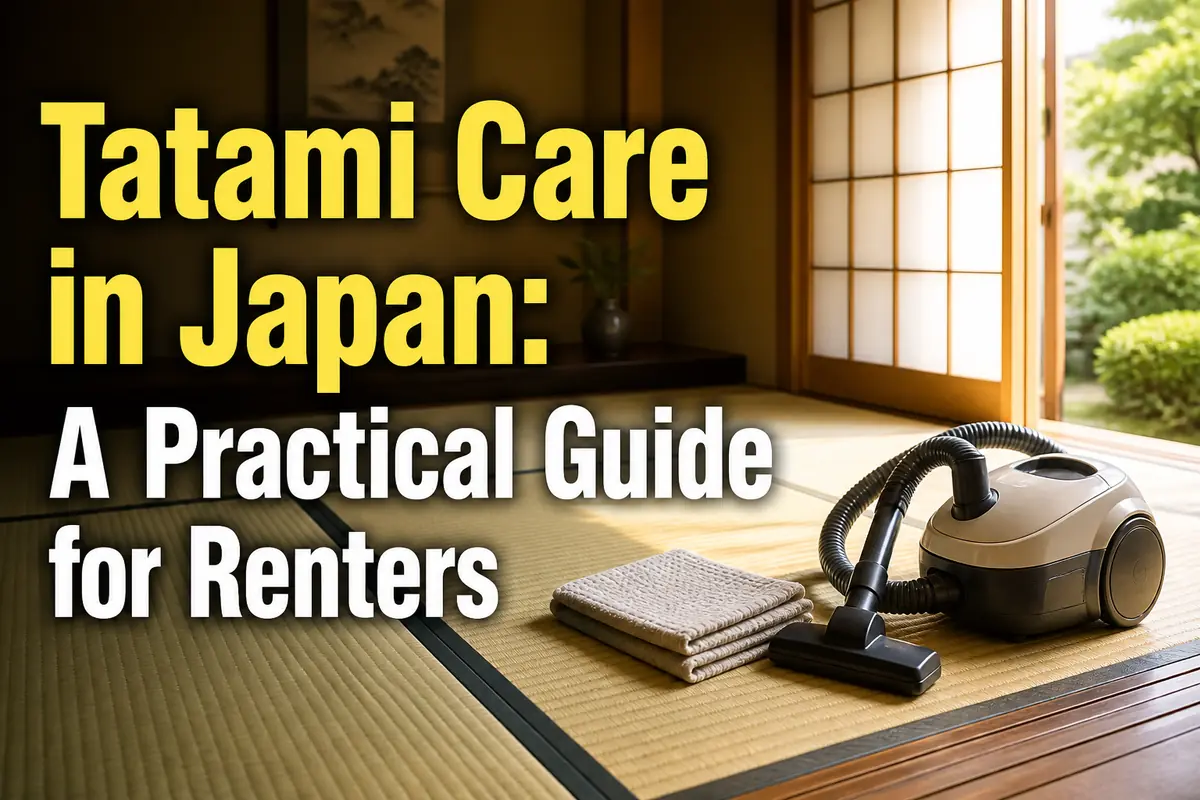
Tatami Care Made Simple: A Renter’s Guide to Cleaning, Mold, and Repairs
Tatami needs a dry, gentle routine: vacuum in the direction of the weave, use as little water as possible, ventilate the room, and report serious mold or damage before attempting a repair. If you rent, do not replace or lift fitted tatami without the landlord’s permission.
This guide is for new residents, students, workers, and other tenants living in a Japanese-style room, or washitsu (和室, Japanese-style room). It explains how to care for traditional rush-grass tatami, recognize problems, and discuss repair costs with a landlord or tatami specialist.
The essentials
- Vacuum gently along the weave, called tatami no me (畳の目).
- Use a dry cloth for routine care; avoid soaking the surface.
- Control humidity with ventilation, air conditioning, or a dehumidifier.
- Photograph stains, mold, dents, and fraying before cleaning or moving in.
- Ask what the surface is made from because natural rush, paper-based, and resin tatami can require different care.
First identify what kind of tatami you have
The surface material determines which cleaning products are safe. Not every green woven floor in Japan is natural rush grass.
Traditional tatami usually has three main parts:
- Tatami-omote (畳表): the woven surface, traditionally made from igusa (い草, rush grass)
- Tatami-doko (畳床): the inner base or core
- Tatami-beri (畳縁): the fabric border found on many rectangular mats
Some modern apartments use paper-based or resin surfaces. These may resist water, fading, or mold better than natural igusa, but they still have product-specific instructions. Color alone is not enough to identify the material.
If you are unsure, check the move-in documents, ask the property manager, or send a clear photograph to a tatami shop. Avoid testing bleach, detergent, alcohol, or stain remover on an unknown surface.
The safest everyday cleaning routine
For most tatami, gentle dry cleaning is enough. The aim is to remove dust and food particles without damaging the weave or adding moisture.
1. Remove loose objects carefully
Lift cushions, bedding, and light furniture instead of dragging them. Check beneath anything that stays in one place because trapped humidity may produce discoloration or mold.
Do not leave a carpet or thick mat permanently over tatami. The National Tatami Promotion Association warns that coverings can trap moisture and make cleaning difficult.
2. Vacuum along the weave
Look closely at the surface to find the direction of its woven lines. Move the vacuum head in that direction, using light pressure.
Going repeatedly across the weave can roughen the surface. A rotating brush designed for carpet may also be too aggressive, so use a gentle floor setting when available.
3. Wipe only when necessary
Use a clean, dry cloth for routine wiping. If the manufacturer or property manager permits damp cleaning, use a cloth wrung out extremely well and dry the surface promptly.
The industry guidance for natural igusa says that a dry cloth—or a cloth tightly wrung with warm water—can be used, but excess moisture must not be absorbed. New tatami can develop uneven discoloration when it becomes wet.
4. Let air circulate
Open windows when weather and security conditions allow, or use an air conditioner’s dry mode or a dehumidifier. Ventilation is especially important after sleeping on a futon, drying laundry indoors, or during Japan’s humid rainy season.
A practical routine is:
- After sleeping: fold and store the futon rather than leaving it down all day.
- During normal cleaning: vacuum along the weave and inspect corners.
- On humid days: use mechanical dehumidification if opening windows would bring wetter air inside.
- After a spill: blot immediately, then keep air moving until the area is dry.
What to do about mold
Small surface growth may be manageable, but recurring, widespread, or deep mold needs professional assessment. Dry the room first; cleaning while the tatami remains damp will not solve the cause.
Natural rush is an organic material and can develop mold when moisture, warmth, and available nutrients remain together. Dust, food crumbs, indoor laundry, covered flooring, and poor airflow can all contribute.
A cautious response to a small surface patch
- Photograph the area before touching it, especially in a rental.
- Ventilate or use dry mode to reduce humidity and dry the surface.
- Keep children and pets away from the work area.
- Follow the care instructions for the identified surface material.
- Clean gently along the weave rather than scrubbing across it.
- Dry the area completely and monitor it for recurrence.
The National Tatami Promotion Association advises drying natural rush tatami, then removing surface mold along the weave with a vacuum or dry cloth; it also notes that ethanol can be effective. However, product instructions differ. DAIKEN, for example, publishes separate guidance for its manufactured tatami surface.
Do not combine cleaning chemicals. Chlorine bleach must never be mixed with acidic cleaners, vinegar, ammonia, or other products. If a label is unclear or written only in Japanese, ask the manufacturer, landlord, or a professional before use.
ここがポイント: Mold is not only a stain to erase. Dry the room, identify the tatami material, document the condition, and address the source of moisture.
Stop and contact the landlord or a specialist when
- Mold covers a large area or returns after drying.
- The room has a strong persistent odor.
- The mat feels soft, swollen, or unusually damp.
- Growth appears between mats or seems to extend below the surface.
- A leak, condensation problem, or building defect may be involved.
- Anyone in the home develops symptoms that may be related to the indoor environment.
A tenant should report a suspected leak promptly. The source may be a pipe, exterior wall, window, or another part of the building that routine cleaning cannot fix.
Spills, dents, fraying, and other damage
Act quickly on moisture, but do not turn a small mark into larger damage through aggressive DIY work.
Liquid spills
Blot the liquid with an absorbent cloth. Press rather than rub, working carefully to prevent the spill from spreading. Then ventilate and dry the area.
For colored drinks, oil, pet accidents, or unknown chemicals, photograph the mark and ask for material-specific advice. General-purpose carpet cleaner may leave residue or discolor natural rush.
Furniture dents
Heavy furniture concentrates pressure on a small area. Use suitable furniture protectors or firm boards to spread the load, but do not cover a large section so completely that air cannot circulate.
Do not use an iron, steam cleaner, or large amount of hot water in a rental unless the landlord or manufacturer approves it. Heat and moisture can affect the surface, core, border, or surrounding floor.
Fraying and splinters
Do not pull loose fibers. Stop dragging objects over the area and ask whether the surface can be repaired or needs replacement. A mat with raised or broken fibers may catch socks, clothing, or skin.
Burns, cuts, and deep stains
These usually need a tatami professional. Home repair methods can remain visible and may complicate a later claim. In a rental, notify the property manager before arranging work yourself.
Repair and replacement are not all the same
A worn surface does not automatically mean the entire mat must be discarded. A tatami shop may suggest one of three levels of work.
Ura-gaeshi (裏返し): turning the surface over
The existing woven surface is removed, reversed, and reattached when its unused side remains suitable. It is generally an option only while the material is still in good condition.
Omote-gae (表替え): replacing the surface
The shop keeps the existing core but installs a new tatami-omote and usually a new border. This may be appropriate when the surface is faded or worn but the base remains firm and level.
Shin-datami (新畳): a completely new mat
The surface, core, and border are replaced. This may be necessary when the mat feels uneven or soft, has gaps or serious deformation, or has damage extending into the core.
Industry organizations publish age ranges as general maintenance guides, but these are not automatic deadlines. Material quality, humidity, use, previous maintenance, and the condition of the core all matter. A professional inspection is more useful than age alone.
How to read a tatami estimate
Compare the scope and material, not only the total price. Tatami sizes and construction vary by region and building, and modern borderless or thin mats may not match conventional pricing.
Ask whether the estimate includes:
- The type of work: ura-gaeshi, omote-gae, or shin-datami
- Surface material and grade
- Natural igusa origin, if relevant
- Border choice or borderless construction
- Collection, delivery, fitting, and furniture moving
- Disposal of old mats
- Tax and any additional work
- The number and actual dimensions of the mats
- Mold treatment or work on the subfloor, if required
A room described as “six tatami” does not guarantee six identically sized standard mats. Regional dimensions, apartment layouts, half mats, thin mats, and custom cuts can change the quote. Arrange an on-site measurement before treating an advertised per-mat price as final.
Who pays in a Japanese rental?
Normal aging and tenant-caused damage are treated differently, but the contract and evidence still matter.
The Ministry of Land, Infrastructure, Transport and Tourism’s restoration guidance says that ordinary wear and age-related deterioration generally are not costs the tenant must bear. Its Q&A specifically states that a tenant normally need not pay to replace tatami surfaces worn only through ordinary use or aging. If the tenant damages them through negligence or abnormal use, the tenant may be responsible for the damaged mats.
There are important limits:
- The national guidance provides a general framework; it is not a price list.
- A lease may contain a special clause about tatami replacement or cleaning.
- Whether such a clause applies can depend on its wording, explanation, and circumstances.
- Public housing, company housing, dormitories, and short-term accommodation may use different agreements.
- Unauthorized repair can create a separate dispute even when the tenant was trying to help.
The National Consumer Affairs Center of Japan advised renters in February 2026 to record a property’s condition at move-in and move-out, contact the landlord promptly about problems, and request an explanation and itemized statement for disputed restoration charges.
Protect yourself from the first day
- Photograph every mat in good light when moving in.
- Take close-ups of existing stains, dents, fading, gaps, and fraying.
- Send the record to the landlord or management company promptly.
- Keep the lease, move-in checklist, emails, repair reports, and estimates.
- Report leaks and serious mold in writing instead of waiting until move-out.
- Before paying a disputed bill, ask which mats were repaired, what work was performed, and how the amount was calculated.
If discussion does not resolve a consumer dispute, Japan’s Consumer Hotline, shōhisha hotto rain (消費者ホットライン), can be reached by dialing 188. Assistance availability in languages other than Japanese varies by local center, so a municipal international association or multilingual consultation desk may also help.
Common mistakes to avoid
Most avoidable damage comes from too much moisture, trapped humidity, or unapproved repair.
- Vacuuming forcefully across the weave
- Wet-mopping tatami like a hard floor
- Using a steam cleaner
- Leaving a futon down continuously
- Covering the whole floor with carpet or vinyl
- Drying laundry over tatami without reducing humidity
- Scrubbing mold before drying the room
- Applying bleach, alcohol, vinegar, or detergent without identifying the material
- Pulling loose rush fibers
- Replacing or lifting fitted mats without the landlord’s approval
- Waiting until move-out to report a leak or recurring mold
Current practical takeaway for 2026
The most important habit is early documentation followed by early reporting. As of August 2026, Japan’s national restoration guidance continues to distinguish ordinary wear from tenant-caused damage, while the National Consumer Affairs Center continues to report disputes over move-out charges.
For day-to-day living, keep the routine simple: clean along the weave, control moisture, and inspect covered areas. When a problem moves beyond surface dust or a small spill, take photographs and contact the responsible person before experimenting.
Your next three checks should be concrete:
- Confirm whether the surface is natural rush, paper-based, or resin.
- Find the lease clause covering genjō kaifuku (原状回復, restoration at move-out).
- Save the landlord, management company, and local tatami specialist’s contact details before an urgent problem appears.
参照リンク
- National Tatami Promotion Association: Tatami Care
- National Tatami Promotion Association: Tatami Variations and Replacement Methods
- All Japan Tatami Business Cooperative Association: Care Instructions
- All Japan Tatami Business Cooperative Association: Ordering and Repair Guidance
- DAIKEN Customer Support: Routine Tatami Care
- Ministry of Land, Infrastructure, Transport and Tourism: Restoration Guidelines Q&A
- Ministry of Land, Infrastructure, Transport and Tourism: Rental Housing Support for Foreign Nationals
- National Consumer Affairs Center of Japan: Rental Restoration Disputes
- National Consumer Affairs Center of Japan: February 2026 Rental Restoration Advice