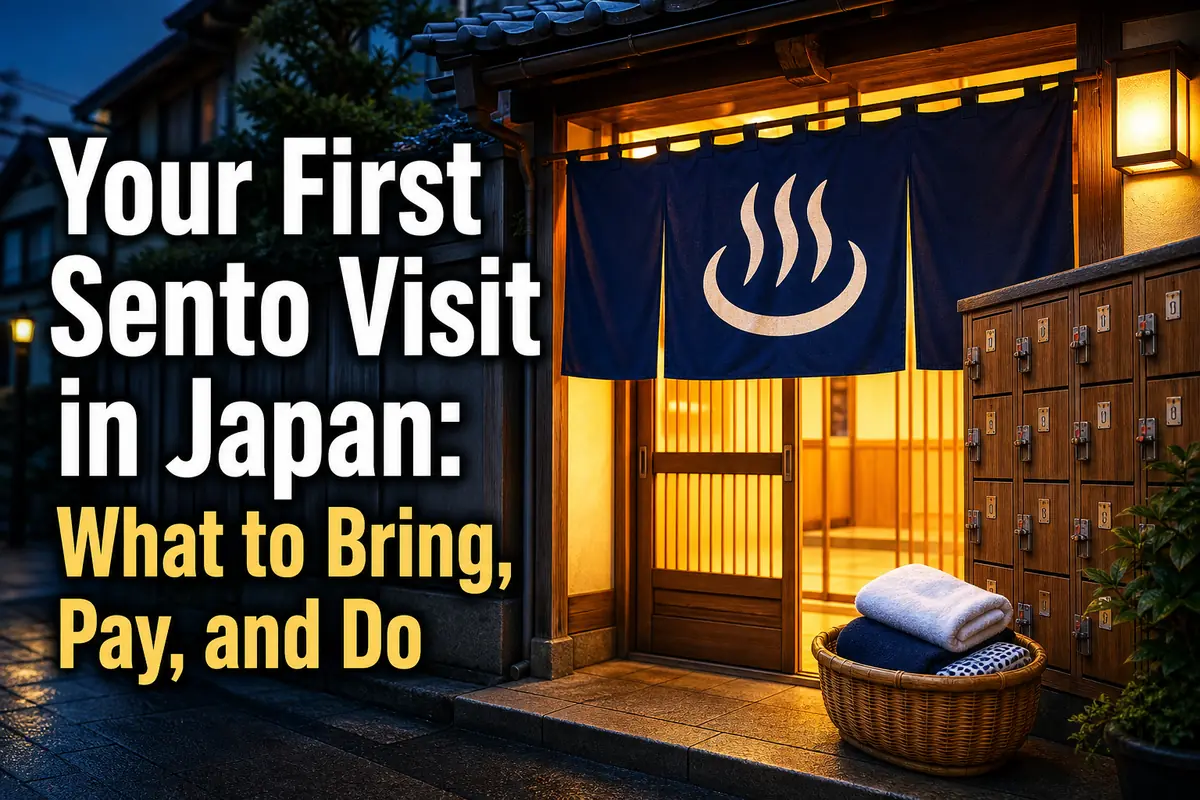
Your First Sento Visit in Japan: What to Bring, Pay, and Do
A neighborhood sento is usually simple to use: pay at the entrance, remove all clothing in the changing room, wash before entering the shared bath, and keep your towel and hair out of the water. You normally do not need a reservation or membership.
The part that requires advance checking is the facility itself. Prices differ by prefecture, while tattoo policies, sauna charges, supplied toiletries, opening hours, and family-bathing rules may differ by bathhouse.
Quick guide
- Bring a small washing towel, a dry towel, soap, shampoo, and cash unless the bathhouse says these are provided.
- Expect a basic sento visit to cost several hundred yen; in Tokyo, the adult ceiling increased to ¥600 on August 1, 2026.
- Bathe without a swimsuit in the section assigned by the facility.
- Wash first. Do not put your towel, hair, or phone near the bathwater.
- If you have tattoos, are visiting with a child, or need a private or accessible bath, contact the facility before traveling.
This guide is for foreign residents, students, workers, and families who want to use a local public bath without being surprised by the payment system or bathing customs.
First, Make Sure You Are Going to a Sento
A sento is a public bath for everyday bathing, not simply another name for an onsen.
Under Japan’s Public Bath Houses Act, public bathing facilities include ordinary public baths used as part of daily community life and other facilities such as large leisure bath complexes and saunas. Ordinary sento admission is subject to prefectural price controls, but other types of bathing facility can use different pricing systems. The Ministry of Health, Labour and Welfare’s overview explains this legal distinction.
Sento
A neighborhood sento generally heats ordinary water, although an individual bathhouse may also use spring water. Its main admission price is controlled locally, and the setup is usually straightforward: changing room, washing stations, and shared baths.
Onsen
An onsen uses qualifying natural hot-spring water. It may be part of an inn, hotel, day spa, or public bath. The admission price and services vary widely.
Super sento, spa, or health-land facility
These are larger leisure facilities that may include restaurants, relaxation rooms, several baths, saunas, or treatments. Their entry fees are not the same as the controlled neighborhood-sento price.
The practical lesson is simple: check the facility type before comparing prices. A search result labeled “public bath” may refer to a basic sento or to a much larger complex.
How Much Does a Sento Cost?
There is no single nationwide admission price because each prefecture sets its own ceiling for ordinary public baths.
As of August 1, 2026, Tokyo’s controlled maximum admission charges are:
- Adult, age 12 or older: ¥600
- Child, age 6 to under 12: ¥200
- Young child, under age 6: ¥100
The adult ceiling rose from ¥550 to ¥600 on August 1, 2026, while the two children’s prices remained unchanged, according to the Tokyo Metropolitan Government announcement.
These Tokyo amounts are not national prices. For example, official information published in 2026 lists an adult ordinary-sento charge of ¥550 in Kyoto. Prices and age bands should therefore be checked with the prefecture or bathhouse where you plan to go.
What the basic fee may not include
The controlled price generally covers admission to the ordinary bathing area. Depending on the facility, you may pay separately for:
- Sauna access
- A rental or purchased towel
- Shampoo, conditioner, soap, or a toiletries set
- A hair dryer
- Premium bathing areas or other optional services
Some sento provide body soap and shampoo at no extra charge. Others sell small bottles or expect visitors to bring their own. The Tokyo Sento Association’s visitor guide advises checking the individual bathhouse.
Cash remains the safest payment choice at a small neighborhood sento. Some facilities accept IC cards, credit cards, or mobile payments, but this is an operator decision rather than a national rule.
Here is the key point: the prefectural sento price is a ceiling for basic admission, not a promise that every extra service is included.
What to Check Before Leaving Home
Two minutes of checking can prevent most first-visit problems.
Look at the bathhouse’s official website, social account, map listing, or entrance notice. Confirm:
- Today’s opening hours and last admission time
- The regular closing day and any temporary maintenance closure
- Basic admission and sauna charges
- Whether towels and toiletries are supplied, rented, or sold
- Accepted payment methods
- Tattoo policy
- Rules for children using a different-gender bath
- Accessibility arrangements if required
- Whether a private or family bath is available
You do not usually need identity documents for ordinary full-price admission. However, a local resident discount, child campaign, student rate, senior bath ticket, or disability-related discount may require proof of age, address, eligibility, or prior registration. Bring the document named by that specific program.
A practical packing list
For a basic visit, take:
- A small towel for washing
- A larger towel for drying
- Soap, shampoo, and conditioner
- A hair tie if your hair can reach the water
- Cash and a small coin purse
- Water for before and after bathing
- A waterproof tattoo cover only if the facility explicitly permits one
Keep luggage light. Shoe lockers and changing-room lockers in older bathhouses may be too small for a suitcase or large backpack.
The Complete Sento Process
The central rule is to keep the shared bath clean: wash at a shower station before soaking.
1. Remove your shoes
Take off your shoes at the entrance and place them in the shoe locker. Keep the locker key or wooden tag with you.
Do not walk into the reception or changing area in outdoor shoes. If you have large boots, ask where to leave them rather than blocking the entrance.
2. Pay at the front desk or ticket machine
Pay the admission charge and request any extras, such as sauna access or a rental towel. Useful phrases include:
Otona hitori desu— One adult, please.Sauna wa ikura desu ka?— How much is the sauna?Taoru wa kariraremasu ka?— Can I rent a towel?Tattoo wa daijōbu desu ka?— Are tattoos allowed?
Older sento may have a traditional raised reception desk called a bandai. Other facilities use a front counter. Follow the signs or the attendant’s direction to the correct changing room.
3. Put everything in a locker and undress
Ordinary sento bathing is done without clothing. Leave your swimsuit, underwear, large towel, phone, and other belongings in the changing-room locker.
Take only the small washing towel and any toiletries into the bathing room. If the locker has a wrist key, secure it so it does not slip off.
Photography is inappropriate in changing and bathing areas. Keep phones and cameras stored even when no other person appears to be nearby.
4. Wash at a seated shower station
Choose an open washing station. Sit on the small stool, rinse it if necessary, and control the shower so that water does not splash neighboring guests.
Wash soap and shampoo off completely. A quick splash of water at the bath entrance—called kakeyu—helps your body adjust to the temperature, but it should not replace a proper wash when washing stations are available.
When finished, rinse the stool and basin and return them neatly.
5. Enter the bath slowly
Sento water may feel hotter than a home bath. Enter gradually and move to another bath or take a break if it is uncomfortable. Never treat enduring painful heat as an etiquette requirement.
While soaking:
- Keep the small towel on your head or beside the bath, not in the water.
- Tie up long hair so it cannot touch the water.
- Do not swim, exercise, splash, or wash inside the bath.
- Keep conversation quiet.
- Do not add cold water without checking with staff or other bathers.
The Japan National Tourism Organization’s bathing guide gives the same core advice: wash first, keep towels and hair out of the water, speak softly, and leave phones outside the bathing area.
6. Dry before entering the changing room
Use the small towel to remove most water from your body before stepping back onto the changing-room floor. Then use your dry towel at the locker.
Dress, check the locker and shoe box for belongings, return borrowed items as directed, and drink water. There is no need to rush, but avoid occupying limited space longer than necessary when the facility is busy.
Tattoos: Ask the Facility, Not the Internet in General
Tattoo admission is an operator rule, so neither “all sento allow tattoos” nor “all Japanese baths ban tattoos” is reliable advice.
The Japan National Tourism Organization notes that some onsen, sento, and pools restrict entry for tattooed guests and recommends checking each facility in advance. Policies can include:
- Tattoos accepted without covering
- Only small tattoos accepted
- Tattoos accepted if covered with an approved waterproof patch
- No tattoos in the shared bath
- Access allowed only to a reservable private bath
Do not assume that covering a tattoo automatically makes entry acceptable. A bathhouse may restrict tattoos regardless of size or may specify the type and dimensions of the cover.
If the website is unclear, send a short message or call before visiting. State the approximate size and number of tattoos. If shared bathing is unavailable, ask about a kashikiri-buro, a bath reserved for private use. Private baths often cost more and may require advance booking.
Visiting With Children or Family Members
Parents must check the local age limit for children entering a different-gender bathing area.
Tokyo’s visitor guidance says children aged seven or older cannot use the opposite-sex bath. The permitted age differs among prefectures, and an individual facility may have a stricter operational rule. Never assume that a rule used on a previous trip applies in another city.
Before a family visit, confirm:
- Which section each child may enter
- Whether an adult must accompany the child
- Whether the bathhouse has a family or private bath
- Whether diaper-age children may use the main tub
- Whether changing equipment is available
- Whether a child discount requires proof of age or residence
A private family bath can also be the better option when a parent cannot accompany a child into the section assigned by the facility. Availability is limited, however, and many neighborhood sento do not have private rooms.
Visitors who are unsure which changing or bathing area to use should contact the facility before arrival. The operator can explain its available arrangements and whether a private option exists.
Health, Hygiene, and Accessibility
A public bath is shared space, so postpone the visit when illness or a physical condition could create a risk for you or others.
Japan’s Public Bath Houses Act requires operators to refuse admission when a person is recognized as having a communicable disease. Individual facilities may also display health and hygiene restrictions.
For a safer visit:
- Do not enter while intoxicated.
- Avoid bathing when you have a fever, vomiting, diarrhea, or a potentially contagious skin condition.
- Covering an open wound does not necessarily make shared bathing appropriate; ask the operator.
- Drink water and take breaks from hot baths.
- Ask a medical professional for personal guidance if heat exposure may affect an existing condition, pregnancy, medication, or mobility.
Accessibility varies greatly. A modern bath may have handrails, low steps, shower chairs, or staff assistance, while an older neighborhood building may have stairs and high bath edges. Contact the facility with concrete questions about entrances, changing space, bath steps, wheelchairs, assistance, and companion access.
Common First-Time Mistakes
Most mistakes come from treating the shared bath like a pool or a private bathroom.
Wearing a swimsuit
Standard sento sections are usually nude bathing areas. Mixed-gender or special-purpose facilities may provide bathing wear, but that exception will be clearly stated.
Entering the tub before washing
The large bath is for soaking after cleaning, not for washing off sweat or soap.
Letting a towel or hair enter the water
Keep both outside the bath. This is one of the most visible rules and one of the easiest to follow.
Assuming shampoo and towels are free
Some facilities supply them; others sell or rent them. Check before paying or bring your own.
Taking a phone into the bathing area
Even an unused phone creates privacy concerns in a place where people are undressed. Store it in your locker.
Changing the bath temperature yourself
Do not run cold water into a shared bath without permission. Other guests may have chosen that bath because they prefer its current temperature.
Treating sauna access as part of admission
Many sento charge separately for the sauna and may issue a wristband, hook, key, or special towel to identify paid users.
What Changed in Tokyo on August 1, 2026?
The main current change is a ¥50 increase in Tokyo’s adult sento ceiling, from ¥550 to ¥600.
The change applies to people aged 12 or older. Tokyo kept the charge at ¥200 for ages six to under 12 and ¥100 for children under six.
For regular users, the difference is concrete: one adult visit now costs up to ¥50 more than it did on July 31. Optional sauna and rental charges remain facility-specific, so the final payment can still exceed ¥600.
This update does not establish a national price. If you live outside Tokyo or travel between prefectures, check the current local amount instead of using Tokyo’s fee as a baseline.
A Simple Plan for Your First Visit
Choose a nearby bathhouse with clear online information, bring your own basics, and ask about any rule that affects admission.
Before you go:
- Confirm the facility is a sento rather than a large spa or hotel onsen.
- Check the opening day, price, tattoo policy, and family rules.
- Pack two towels, toiletries, a hair tie, cash, and water.
- At the bathhouse, remove shoes, pay, undress, and lock away your phone.
- Wash completely before soaking.
- Keep your towel and hair out of the bath, then dry off before returning to the changing room.
The most important next step is not memorizing every custom. It is checking the few rules that can change your visit—admission price, tattoos, child access, optional charges, and accessibility—directly with the bathhouse you intend to use.
参照リンク
- Ministry of Health, Labour and Welfare: Overview of the Public Bath Houses Act
- Tokyo Metropolitan Government: Public bath admission price ceiling from August 1, 2026
- Tokyo Sento Association: How to Enjoy Sento
- Japan National Tourism Organization: How to Best Enjoy Japan’s Onsen
- Japan National Tourism Organization: Japan Travel FAQ
- Kyoto City: Bathing tax and ordinary sento price information