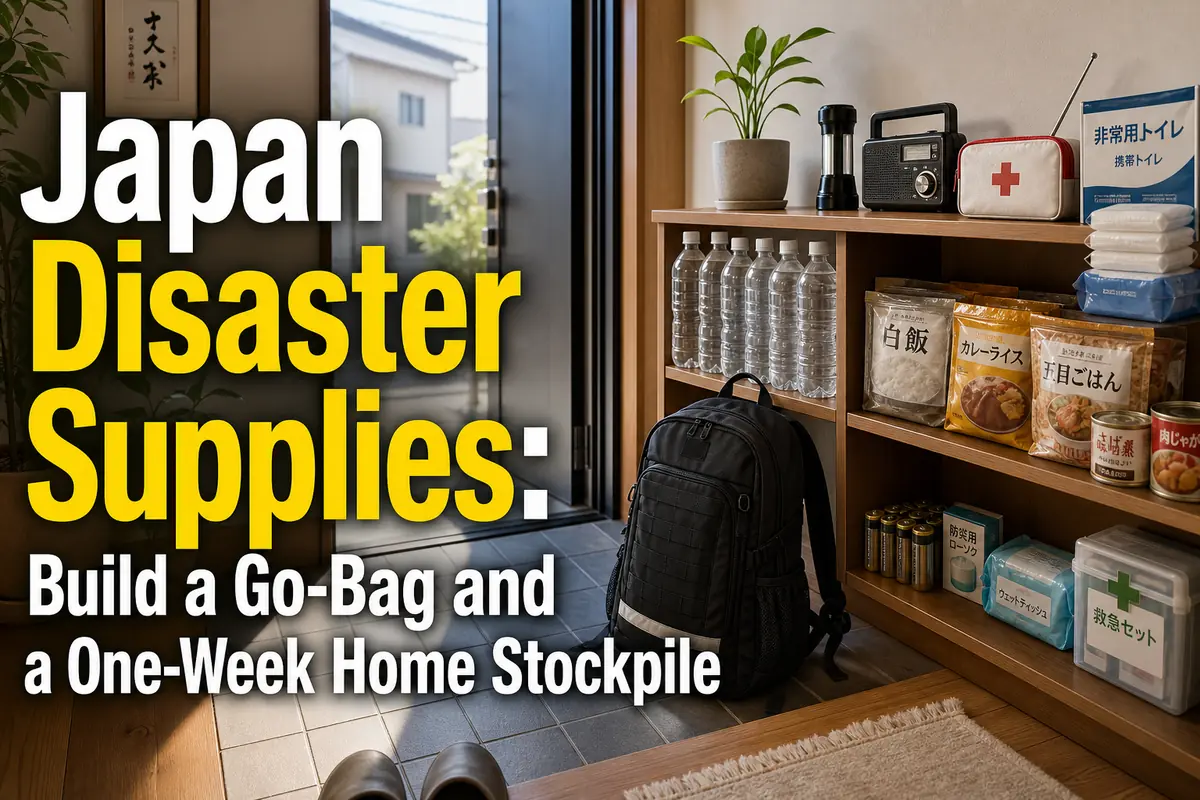
Japan Disaster Supplies: Build a Go-Bag and a One-Week Home Stockpile
For most foreign residents in Japan, one pre-packed backpack is not enough. A practical setup has two separate layers:
- A light go-bag for leaving home quickly
- A larger home stockpile for living without water, power, gas, sewage, or normal deliveries
- Personal supplies that public shelters may not have, including medicine, allergy-safe food, baby products, and pet items
- Copies of important information that you can use even if your phone has no signal or battery
Tokyo’s official preparedness guidance recommends maintaining about one week of supplies at home. Japan’s Fire and Disaster Management Agency also advises preparing a minimum set of portable items in advance rather than trying to collect them after an evacuation becomes necessary.
This guide is for foreign residents, students, workers, and families setting up a home in Japan. It is especially useful after moving, before typhoon season, or whenever household members, medication, dietary needs, or addresses change.
First, separate evacuation supplies from home supplies
The central decision is not what to buy, but where and how you may need to use it. Trying to fit a week of water and food into one backpack produces a bag that may be too heavy to carry safely.
Layer 1: Your go-bag
A go-bag, often called a hijō mochidashi bukuro (非常持出袋), is for urgent evacuation. Keep it near an exit where it will not be buried by falling furniture.
It should help you move safely, receive information, manage essential health needs, and get through the first part of an evacuation. It is not meant to contain your entire household stockpile.
Pack these essentials first:
- Drinking water in small, portable bottles
- Ready-to-eat food that does not require cooking
- Regular medicine and a copy of prescription information
- A small first-aid kit
- A flashlight or headlamp
- Spare batteries
- A mobile battery and charging cable
- A battery-powered or hand-crank radio
- Masks, tissues, wet wipes, and a small towel
- A portable toilet kit
- Work gloves and sturdy footwear
- Rain protection and season-appropriate clothing
- A whistle
- Some cash in small notes and coins
- Copies of identification and emergency contact details
Japan’s Fire and Disaster Management Agency includes food, water, first-aid supplies, a radio, clothing, masks, wet wipes, flashlights, cash, and copies of identification among its suggested portable supplies. It also stresses that the correct contents depend on the individual.
Layer 2: Your home stockpile
A home stockpile supports zaitaku hinan (在宅避難), or sheltering at home, when the building is safe enough to remain in. This can reduce pressure on evacuation facilities and may be more manageable for families, pets, or people with special dietary needs.
However, staying home is not automatically the safest choice. Leave if the building is damaged, there is a fire, a tsunami threatens the area, flooding or landslides are expected, or local authorities instruct residents to evacuate.
Your home supplies should cover:
- Water
- Food
- Portable toilets and sanitation items
- Lighting and communications
- Safe methods for heating food
- Medicine and health supplies
- Warmth or heat protection
- Household-specific needs
Tokyo’s official stockpiling guidance explains why this layer matters: roads and utilities may be damaged, deliveries may stop for several days, and residents whose homes remain safe may need to live there temporarily.
ここがポイント: Keep the go-bag light enough to carry. Store the heavier water, food, toilet supplies, and cooking equipment at home.
Calculate water before buying gadgets
Water is the item most likely to determine the size and weight of your stockpile. Tokyo’s preparedness material uses a planning figure of three liters of water per person per day.
That gives the following basic calculation:
- One person for three days: 9 liters
- One person for seven days: 21 liters
- Two people for seven days: 42 liters
- A family of four for seven days: 84 liters
This amount is mainly a drinking and basic food-preparation benchmark. Washing, toilet flushing, and other household uses can require additional water.
Store water in more than one place if possible. A single stack may become inaccessible after shelves fall or a room is damaged. Smaller bottles are easier to carry, while larger containers can be more efficient for home storage.
Check the printed storage instructions and best-before dates. Do not assume every plastic bottle is designed for many years of storage.
Plan for sewage failure as well as water failure
A common mistake is storing drinking water but forgetting that toilets may not work. Even if water is available, flushing can be unsafe when building pipes or public sewer lines are damaged.
Keep portable toilet bags, absorbent material, disposal bags, toilet paper, sanitizer, and deodorizing supplies together. Apartment residents should check building-management instructions after a major earthquake before flushing a toilet.
The correct quantity depends on household size and personal use. Count how many times each person normally uses the toilet in one day, multiply by the number of people and planned days, and add a margin.
Build a one-week food plan you will actually eat
The best emergency food is familiar food that can be stored, opened, and eaten under limited conditions. Expensive disaster-branded meals are optional, not the starting point.
Tokyo promotes “everyday stockpiling,” also known as rolling stock. You keep extra quantities of normal shelf-stable products, use the oldest items in daily meals, and replace them during regular shopping.
Useful choices include:
- Packaged rice that can be eaten after heating
- Canned fish, meat, beans, fruit, and vegetables
- Retort-pouch curry, soup, or other prepared meals
- Crackers, cereal, energy bars, and dried fruit
- Long-life milk or plant-based drinks
- Instant soup or noodles
- Nut or seed products, where allergies allow
- Baby food or formula suitable for the child
- Familiar comfort foods that require little preparation
Check the hidden requirements
A food item is not useful merely because it has a long shelf life. Before adding it, ask:
- Can it be opened without an electric appliance?
- Can it be eaten without heating?
- If it needs water, have I included that water in my calculation?
- If it needs a stove, do I have suitable fuel and ventilation?
- Can everyone in the household eat it safely?
- Will it create a large amount of waste?
Keep a manual can opener if any cans require one. Test unfamiliar products before buying a large quantity.
Prepare separately for dietary restrictions
People with allergies, vegetarian or vegan diets, religious food restrictions, swallowing difficulties, or medical diets should not assume that suitable food will be available immediately at a shelter.
Tokyo Stockpiling Navi specifically advises people with food allergies to prepare appropriate food in advance, check ingredient labels, rotate stock, and make portable options available. Keep the original packaging where possible so ingredients and allergen information remain visible.
For severe allergies, consider carrying a short explanation in Japanese and English. Medicine and emergency treatment devices should follow instructions from the prescribing medical professional.
Add power, light, and information tools
A working phone helps, but a phone alone is not a complete communications plan. Mobile networks can be congested, batteries run down, and charging may be unavailable.
Prepare a small set of tools with different failure points:
- A headlamp for hands-free movement
- An LED lantern for lighting a room
- A charged mobile battery
- Charging cables for each essential device
- Spare batteries in the correct sizes
- A radio that can receive local broadcasts
- A paper list of important telephone numbers
- A printed local map and evacuation information
Test every device. Confirm which batteries it uses and whether the radio can be operated without reading Japanese menus.
The Japan Meteorological Agency provides multilingual disaster information covering weather, heavy rain, earthquakes, tsunamis, and volcanic activity. Bookmark the multilingual page, but also write down your municipality’s official disaster website and contact channels because evacuation information is issued locally.
Protect documents, money, and essential information
Copies and written details are more practical than carrying every original document in one bag. Losing all original documents during an evacuation can create a second problem.
Prepare a waterproof information pouch containing copies or records of:
- Residence card or passport identification page
- Health insurance information
- Driver’s license, if relevant
- Prescription details and medicine names
- Emergency contacts in Japan and overseas
- Household members’ names and dates of birth
- Your address written in Japanese
- Landlord, building manager, school, or employer contacts
- Insurance policy and bank contact information
- The location of your designated evacuation site
Protect sensitive data. Carry only what is needed, lock digital copies, and review who could access the pouch.
Cash can matter when card terminals, ATMs, or communications are unavailable. Keep a modest emergency amount in smaller denominations rather than concentrating a large sum in the bag.
Customize the kit for the people in your home
A standard checklist becomes useful only after it is adjusted to real household needs. Public assistance may not immediately provide a familiar brand, correct size, translated instructions, or medically appropriate substitute.
Medicine and health needs
Keep necessary medicine accessible and discuss emergency continuity with the prescribing clinic or pharmacy. Storage limits, refill rules, and temperature requirements differ by medicine, so generic stockpiling advice cannot replace professional instructions.
Also consider:
- Glasses, contact-lens supplies, or hearing-aid batteries
- Menstrual products
- Denture supplies
- Mobility aids
- Written medical information
- Masks and hygiene supplies
- A thermometer and basic first-aid materials
Do not place temperature-sensitive medicine in a hot car or another unsuitable storage area.
Babies and children
Families may need liquid or powdered formula, feeding equipment, diapers, wipes, changing bags, child medicine, spare clothing, and a familiar comfort item.
If using powdered formula, include the water, fuel, and equipment required to prepare it safely. Review sizes and expiration dates frequently because children’s needs change quickly.
Pets
Prepare pet food, water, medicine, a carrier or leash, toilet supplies, vaccination information, and a recent photograph. Shelter access and pet arrangements vary by municipality and facility. Check local rules before a disaster rather than assuming a pet can stay in the same indoor space as its owner.
Older adults and people with disabilities
Plan around mobility, communication, power-dependent devices, continence supplies, and assistance during evacuation. Registering for local support may be possible in some municipalities, but eligibility and procedures differ.
Ask the municipal disaster-management or welfare office what programs exist locally. An employer, school, university, or care provider may have a separate plan as well.
Spend in the right order
A useful kit does not need to be purchased in one expensive shopping trip. Cover the failures that create immediate health and sanitation problems first.
A sensible buying order is:
- Regular medicine, water, portable toilets, and ready-to-eat food
- Light, batteries, phone charging, and a radio
- Hygiene items, gloves, footwear, and weather protection
- A safe cooking method and compatible fuel
- Household-specific supplies for children, allergies, disabilities, or pets
- Optional upgrades such as solar charging or specialized camping equipment
Start by checking what you already own. A normal backpack, flashlight, plastic bags, food wrap, towels, shelf-stable groceries, and camping equipment may already cover part of the list.
Prices vary by store, brand, capacity, season, and region. Instead of setting one national budget, divide purchases over several shopping trips and prioritize items that can also be used in daily life.
Use rolling stock to control waste
Write the oldest expiration month on a visible label or keep a simple phone reminder. Place newer goods behind older ones and use the oldest products first.
Review the stockpile at least twice a year and whenever someone joins or leaves the household. Also check it after using supplies during an outage, illness, or trip.
Store supplies where they remain reachable
A perfectly stocked cupboard is useless if a fallen cabinet blocks it. Spread essential supplies across safe, accessible locations.
Practical storage choices include:
- The go-bag near the main exit
- Shoes, gloves, and a flashlight beside the bed
- Some water and food outside the kitchen
- Portable toilets close to the bathroom
- A small workplace or commuting kit
- A compact car kit, if you drive
Avoid placing heavy water containers on high shelves. Keep exits clear, secure furniture, and protect items from heat, moisture, pests, and direct sunlight.
People in high-rise buildings should plan for stairs, lift shutdowns, and difficulty carrying water upstairs. Coastal, riverside, landslide-risk, and heavy-snow areas require different additions. Use your municipality’s hazard information to decide whether supplies should support rapid evacuation, staying home, or both.
Common mistakes to avoid
Most kit failures come from weight, incompatibility, or neglect—not from missing specialist equipment. Check for these problems:
- Putting the full home stockpile into one uncarryable bag
- Storing food that requires more water or fuel than planned
- Buying devices without the correct batteries or cables
- Forgetting portable toilets
- Keeping all supplies in one room
- Packing expired medicine or outgrown child supplies
- Assuming shelters will immediately provide special food or pet accommodation
- Relying only on a smartphone
- Never opening or testing emergency equipment
- Using a portable stove without following its ventilation and safety instructions
Run a short home test. For several hours, turn off unnecessary lights, avoid tap water, prepare one stockpile meal, use only stored charging power, and locate every item without searching online. The problems you find will produce a better shopping list than buying more gadgets at random.
What is national guidance and what changes locally?
Japan provides broad preparedness guidance, but evacuation operations and available support are managed locally. Your city, ward, town, or village determines shelter locations and communicates local evacuation instructions.
Confirm these points with your municipality:
- Which evacuation site applies to each type of hazard
- Whether the site is open before traveling there
- Pet arrangements
- Support for residents who need assistance
- Emergency water distribution locations
- Multilingual information channels
- Local waste and portable-toilet disposal instructions after a disaster
Apartment management, employers, schools, and universities may also have their own assembly points, supply policies, and safety-confirmation systems. Those arrangements supplement local government instructions; they do not replace them.
Current status as of August 2026
The core preparation advice remains to maintain portable evacuation supplies and a larger household stockpile. Tokyo’s current English-language preparedness resources continue to promote everyday stockpiling and planning for approximately one week at home.
Disaster information systems can change. In 2026, the Japan Meteorological Agency published information about revised disaster-weather messaging, including English material. That update affects how residents interpret warnings, not the basic need for water, food, sanitation, medicine, and backup power.
Before relying on an old printed guide, check:
- The latest Japan Meteorological Agency information
- Your municipality’s current hazard map and evacuation pages
- Your building’s emergency plan
- Current instructions for medicine, batteries, fuel, and stored food
A practical 60-minute setup plan
You can create a workable first version today and improve it later. Use this order:
- Choose one backpack and one home-storage area.
- Put medicine, a flashlight, charging equipment, masks, cash, and identification copies in the bag.
- Calculate seven days of water for the household using three liters per person per day as the planning figure.
- Count seven days of food, including options that need no heat.
- Calculate portable-toilet use for every household member.
- Add dietary, medical, baby, disability, and pet supplies.
- Bookmark official multilingual information and write essential contacts on paper.
- Set two review dates each year.
Do not wait for a perfect kit. The most important next step is concrete: separate a carryable bag from your one-week household supplies, then test whether both still work during a power and water outage.
参照リンク
- Fire and Disaster Management Agency: Preparing emergency items to take with you
- Tokyo Stockpiling Navi: Why Stockpiling Matters
- Tokyo Stockpiling Navi: Preparing for major disasters and choosing home evacuation
- Tokyo Stockpiling Navi: Useful supplies and recommended quantities
- Tokyo Stockpiling Navi: Food preparation for allergies, vegetarian diets, and vegan diets
- Japan Meteorological Agency: Multilingual Information on Disaster Mitigation
- Japan Meteorological Agency: 2026 changes to disaster weather information