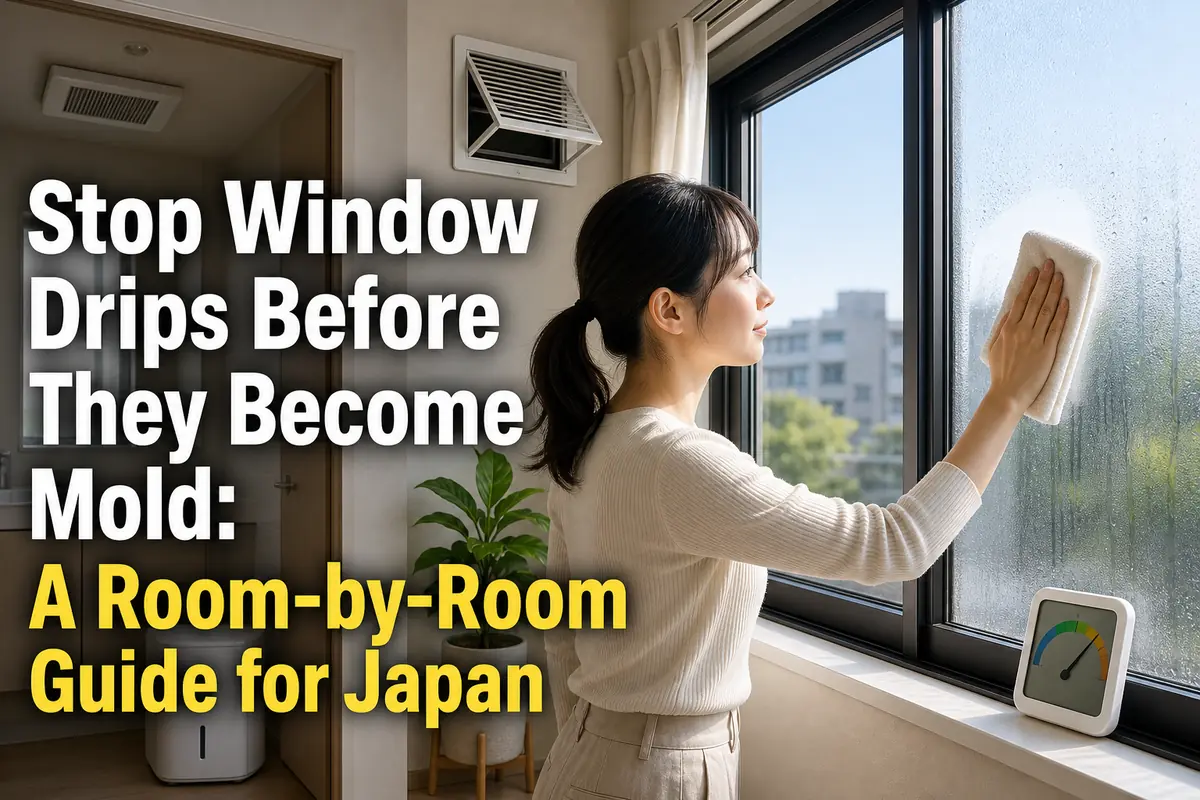
Stop Window Drips Before They Become Mold: A Room-by-Room Guide for Japan
The most effective way to control condensation and mold in a Japanese apartment is to remove moisture at its source, keep the ventilation system running, and dry wet surfaces quickly. A dehumidifier can help, but it cannot fix blocked air vents, furniture pressed against a cold wall, or a bathroom left damp overnight.
This guide is for renters and their families, especially during Japan’s humid rainy season and hot summer, or when winter condensation forms on cold windows and exterior walls.
Quick action plan:
- Keep the apartment’s 24-hour ventilation system on, if installed.
- Leave air inlets open and clean their filters.
- Use exhaust fans while bathing and cooking.
- Wipe condensation from windows and frames before it sits.
- Leave space behind furniture and around stored items.
- Photograph recurring mold, leaks, or damaged finishes and notify the landlord or property manager early.
Why moisture builds up in Japanese apartments
Condensation appears when warm, moist indoor air meets a surface cold enough for water to collect. Mold becomes more likely when that moisture remains on glass, seals, wallpaper, wood, tatami, or stored belongings.
Everyday activities add water vapor to the room:
- Showering and filling a bath
- Cooking, boiling water, and washing dishes
- Drying laundry indoors
- Using an unvented combustion heater
- Sleeping in a closed bedroom
- Running a humidifier too strongly
The season changes where the risk appears. During winter, windows, metal frames, and poorly insulated exterior walls can become cold. During the rainy season and summer, outdoor air itself may contain a great deal of moisture, so opening every window is not always enough. Air conditioning in dry mode or a dehumidifier may be more effective then.
Apartments also vary. A ground-floor unit, a north-facing room, a room beside an exterior concrete wall, and a tightly sealed newer building may behave differently. Treat visible water and musty smells as information about your particular home rather than relying only on the season.
Start with the ventilation system
The first control is airflow, not a stronger cleaning product. Japan’s Ministry of Land, Infrastructure, Transport and Tourism explains that mechanical ventilation is generally required in buildings under sick-house provisions; for homes, the standard described is at least 0.5 air changes per hour. The equipment often appears as a bathroom or toilet exhaust fan combined with air inlets in living rooms and bedrooms.
Identify what your apartment has
Look for:
- A switch labeled
24時間換気(24-hour ventilation) - Round or square air inlets labeled
給気口or吸気口 - Exhaust fans in the bathroom, toilet, washroom, or kitchen
- A filter or cover that can be removed for cleaning
- Instructions in the apartment manual or near the control panel
If you are unsure, ask the landlord or management company which switch should remain on. Do not dismantle installed equipment beyond the cleaning steps allowed in its manual.
Keep both the inlet and outlet clear
An exhaust fan cannot move air properly if replacement air cannot enter. Keep furniture, curtains, boxes, and dust away from air inlets. Clean accessible filters according to the equipment instructions.
The Ministry of Health, Labour and Welfare’s current ventilation guidance says that homes with constant ventilation should keep it operating, clean filters periodically, and avoid blocking air inlets with furniture. Although that guidance is presented in a respiratory-infection context, the airflow steps also help remove indoor moisture.
For a quick exchange of air, open two windows or doors on opposite sides when possible. With only one window, open the room door and point a fan toward the window so stale air moves outside.
ここがポイント: A closed air inlet, a stopped exhaust fan, and wet indoor activities can overwhelm a room quickly. Restore the intended airflow before buying extra equipment.
Control moisture where it starts
Removing water vapor near its source is easier than drying the whole apartment later. Focus on the bathroom, kitchen, laundry area, and bedroom first.
Bathroom
Run the bathroom exhaust fan during bathing and continue afterward until surfaces are dry. Keep the bathroom door closed while exhausting humid air unless the equipment manual says otherwise; this prevents steam from spreading into the hall and bedrooms.
After bathing:
- Remove standing water where practical.
- Dry the tub cover, walls, door seals, and window ledges that stay wet.
- Hang towels so air can reach both sides.
- Avoid leaving a full uncovered bath to cool for hours.
- Clean the fan cover and filter at the recommended interval.
Some apartments have a bathroom drying system labeled 浴室乾燥. It can dry the room and laundry, but its operating cost and performance depend on whether it uses electricity or gas. Check the control panel and rental documents before treating it as the cheapest daily option.
Kitchen
Use the range hood while cooking and leave it on briefly afterward. Cover pots when possible, and do not let boiling water continue longer than needed.
A range hood is designed for cooking exhaust. It should not be treated as the only ventilation system for the entire apartment unless the building instructions say so. Grease buildup also reduces performance, so clean accessible filters according to the manufacturer’s directions.
Indoor laundry
Laundry releases moisture as it dries. On wet or humid days, put it in one controlled area with an exhaust fan, air conditioner in dry mode, or dehumidifier. Space garments apart and direct circulating air between them.
Avoid distributing wet clothes across several closed rooms. That makes the moisture harder to capture and can expose closets, bedding, and exterior walls.
Bedroom
People release moisture while sleeping, so a closed bedroom can be damp by morning even without visible water. Check the window, the wall behind the bed, and the underside of bedding.
Air the room after waking. If a mattress or futon lies directly on the floor, follow its care instructions and lift or air it regularly. Tatami and the underside of bedding need airflow; leaving them covered continuously can trap moisture out of sight.
Use humidity readings as a warning system
A small hygrometer helps you react before water appears, but the reading is a guide rather than a legal rule for apartments. Place it away from a window, air-conditioner outlet, humidifier, or direct sunlight, which can distort the result.
Japan’s Ministry of Health, Labour and Welfare lists a relative-humidity range of 40% to 70% in environmental standards for certain large buildings with air-conditioning equipment. That is not a universal residential lease standard. For mold prevention at home, rising humidity, persistent readings near the upper end of that range, musty odors, and visible condensation should prompt action.
Try this sequence:
- Stop or reduce the moisture source.
- Run the installed exhaust or 24-hour ventilation.
- Use air conditioning in dry mode or a dehumidifier if outdoor air is also humid.
- Confirm that the reading falls and wet surfaces dry.
- Inspect hidden cold spots if the room remains musty.
Be careful with humidifiers in winter. The Ministry of Health, Labour and Welfare discusses 50% to 60% humidity in guidance for dry indoor air and respiratory infections, but continuously pushing humidity upward can worsen condensation in a cold apartment. Watch the windows and exterior walls, not only the humidifier display.
Protect windows, walls, closets, and furniture
The highest-risk places are often surfaces with little warmth and little airflow. A room can look dry in the center while water collects behind a wardrobe.
Windows and frames
Wipe droplets from glass, frames, seals, and the sill. Dry the cloth afterward rather than leaving it wet in the same room. Check the bottom corners of curtains, where fabric may touch damp glass.
Insulating curtains or removable window products may reduce cold surfaces, but obtain permission before attaching anything that could damage glass, seals, frames, or wallpaper. Some films are unsuitable for particular glass types.
Exterior walls and large furniture
Leave a gap between furniture and the wall so air can circulate. UR Housing’s English resident guide also advises keeping furniture away from walls and leaving space around stored items. Exact spacing depends on the room, but even a modest visible air path is better than pressing a wardrobe tightly against a cold wall.
Check behind:
- Beds and headboards
- Wardrobes and bookcases
- Sofas against exterior walls
- Refrigerators and washing machines, where safely accessible
- Cardboard boxes stored on the floor
Do not block an air inlet to create this gap elsewhere. The whole airflow path—from inlet, through the room, to exhaust—matters.
Closets and storage
UR’s guide recommends airflow around stored items, including space underneath and around them, and periodically opening sliding closet doors. Practical renter-friendly measures include slatted platforms, breathable storage, and avoiding overpacking.
Store only dry clothes and bedding. Cardboard readily holds moisture, so inspect it often or replace long-term floor storage with a more suitable system.
What to do when you find mold
Small surface spots require prompt, careful action; recurring or extensive growth needs the property manager’s attention. First identify whether the moisture came from daily use, a plumbing leak, rain entry, failed ventilation, or persistent condensation.
Before cleaning:
- Photograph the location and surrounding area.
- Check the lease, resident manual, and product-care instructions.
- Ventilate the area and keep children and pets away.
- Wear protection appropriate for the cleaning product.
- Test any permitted cleaner on a hidden area first.
Use only a product suitable for that surface and follow its label exactly. Never combine chlorine-based cleaners with acidic products or other cleaners. Wallpaper, untreated wood, tatami, painted surfaces, window seals, and bathroom materials may each require different treatment; aggressive scrubbing or soaking can spread damage.
Contact the landlord or management company instead of relying only on repeated cleaning when:
- Mold returns soon after drying and ventilation.
- The wall or ceiling is wet, soft, swollen, stained, or peeling.
- Water appears after rain or when an upstairs fixture is used.
- The exhaust fan does not work.
- Growth covers a large area or extends inside building materials.
- A strong musty odor remains without visible surface mold.
- A resident develops symptoms that may be related to the indoor environment.
For health symptoms, seek advice from a medical professional. A general housing guide cannot determine whether mold caused a particular symptom.
Rental responsibility: document first, argue later
Tenants should report building defects promptly, while landlords and tenants may disagree about whether damage came from the building or daily care. The answer depends on the lease, the cause, the history of reports, and the condition of the equipment.
Keep a simple record containing:
- Dated photographs
- Humidity readings and room location
- When condensation appears
- Ventilation or dehumidifier use
- Any broken fan, leak, or blocked fixed vent
- Messages sent to the landlord or management company
- Repair visits and instructions received
Do not paint over mold, remove wallpaper, replace installed fans, seal vents, or make permanent alterations without written permission. Such work can hide the cause and create a dispute at move-out.
If you have just moved in, record existing stains, damaged seals, and musty areas immediately. If the condition worsens despite ordinary ventilation and cleaning, report the change in writing rather than waiting until the end of the lease.
Common mistakes that let mold return
Most repeat problems come from treating the visible spot while leaving the moisture pattern unchanged. Watch for these mistakes:
- Turning off 24-hour ventilation because the inlet feels cold
- Blocking air inlets with furniture or tape
- Opening windows during very humid weather and assuming that alone will dry the room
- Running a humidifier without checking windows and walls
- Drying laundry throughout a closed apartment
- Pushing beds and wardrobes tightly against exterior walls
- Leaving morning condensation on frames and seals
- Cleaning visible mold without reporting a leak or broken fan
- Making permanent window or wall changes without permission
An air purifier may capture some airborne particles, but it does not remove water vapor. For a damp room, moisture control and ventilation remain the main tasks.
A routine for each season
The same apartment needs different tactics as outdoor temperature and humidity change. Use the building’s equipment and the actual room conditions as your guide.
Rainy season and humid summer
- Keep exhaust and constant ventilation operating.
- Use cooling, dry mode, or a dehumidifier when outdoor air is humid.
- Dry laundry in one controlled space.
- Check closets, shoe storage, tatami, and furniture backs weekly.
- Empty dehumidifier tanks and clean filters as instructed.
Winter
- Wipe window condensation in the morning.
- Ventilate without letting the apartment remain cold and wet.
- Use kitchen and bathroom exhaust at the source.
- Reduce humidifier output if droplets form.
- Inspect cold exterior walls behind furniture.
Before a long absence
- Remove wet laundry, bathwater, food waste, and damp towels.
- Dry the bathroom and kitchen.
- Leave the installed constant ventilation running if that is the building’s normal instruction.
- Arrange furniture and closet contents so air can move.
- Follow management instructions for typhoons, severe weather, and extended absences.
What to check today
A ten-minute inspection can reveal the problem before the next cleaning cycle. Start with the ventilation switch, then trace the air path through the apartment.
Check these five points:
- Is the 24-hour ventilation system operating?
- Are air inlets open, clean, and unobstructed?
- Is there water on a window, frame, bathroom seal, or exterior wall?
- Can air move behind the largest furniture and stored items?
- Is any recurring dampness documented and reported?
As of August 2026, the practical official guidance remains consistent: use installed constant ventilation, keep its airflow path clear, and remove moisture rather than allowing it to sit. The next watchpoint is not a nationwide deadline or new application procedure. It is whether your particular apartment keeps becoming wet despite those steps. If it does, record the pattern and ask the property manager to investigate the building, ventilation equipment, or possible leak.
参照リンク
- UR Housing — A Guide for Residents: Housing and Facilities
- UR Housing — Part Two: A Guide to Housing and Facilities
- Ministry of Land, Infrastructure, Transport and Tourism — Information on Ventilation in Homes and Other Buildings
- Ministry of Health, Labour and Welfare — FY2025 Q&A on Comprehensive Measures for Acute Respiratory Infections
- Ministry of Health, Labour and Welfare — Environmental Sanitation Management Standards for Buildings